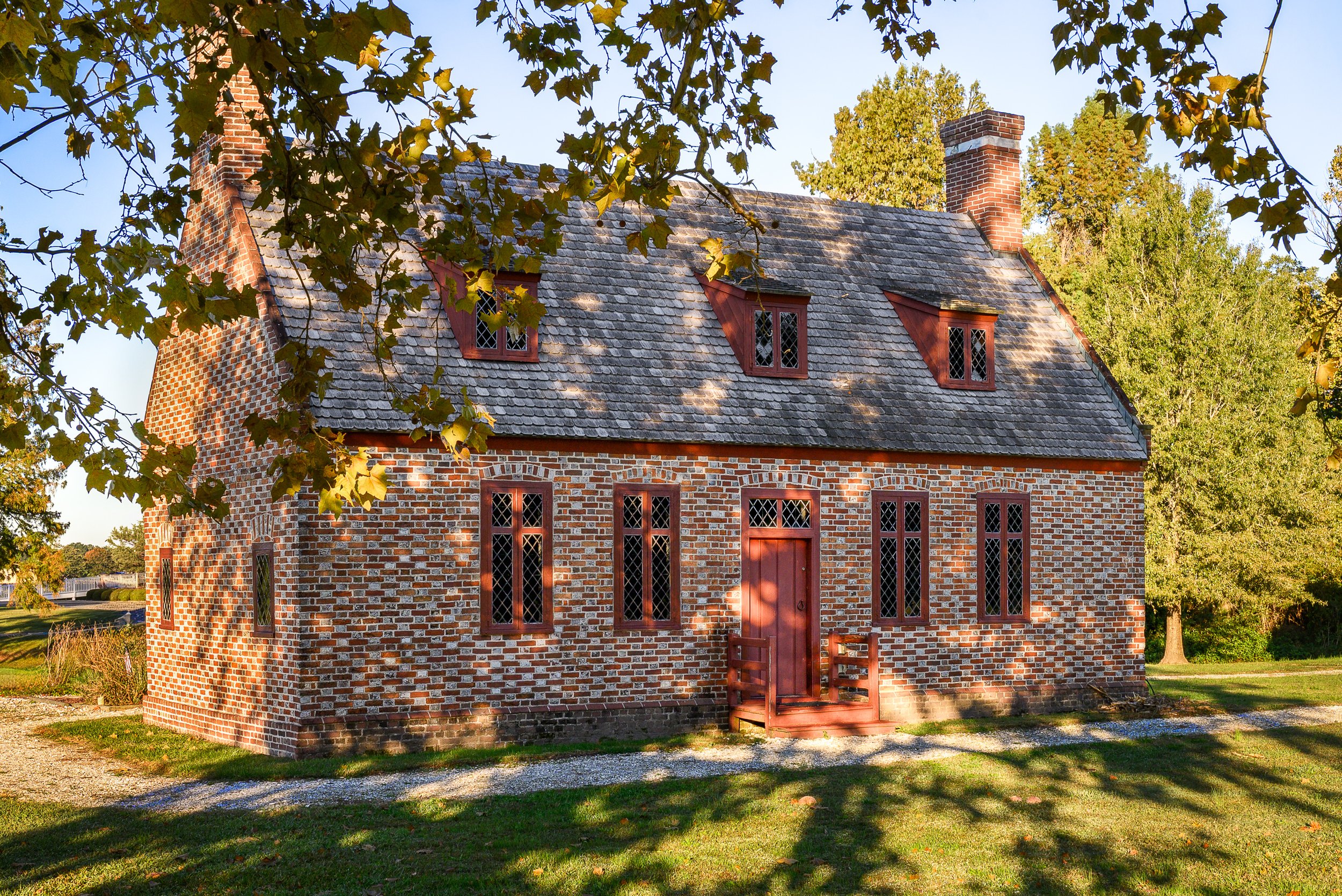
There is something special about standing inside a home that has been here for nearly 300 years. The craftsmanship, the materials, and the architectural details tell a story of a time when homes were built differently.
Although we've had our home in Edenton for years, we had never visited the Newbold-White House in nearby Hertford, North Carolina. I had seen photographs of the property online, and the wood-paneled walls and diamond-shaped leaded-glass windows immediately caught my attention.
Built around 1730, the Newbold-White House is one of North Carolina's oldest surviving homes. I reached out to the organization responsible for preserving the property and offered to photograph it. It was an opportunity to document a piece of North Carolina history as it stands in 2026, capturing the interiors and exteriors during the fall season.
This collection became another addition to my KEPT series, where I share historic homes, spaces, and architectural details that I believe are worth preserving through photography.
A Closer Look at the Craftsmanship
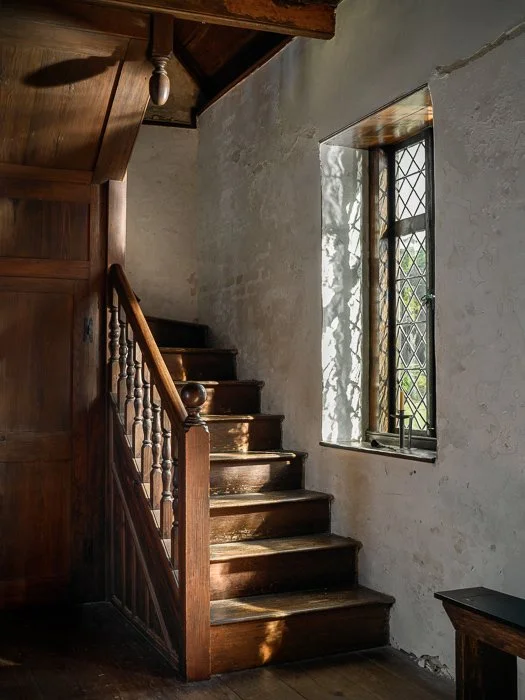
Once inside, I found myself appreciating how many different materials and textures were brought together in this relatively simple home.
The diamond-shaped leaded-glass windows were among my favorite details. Alongside them were plaster walls, wood-paneled rooms, and exposed ceiling beams. Each element added something different to the space.
What stood out most was the craftsmanship.
There was nothing particularly elaborate about the house, yet the attention to construction and materials was evident throughout. These were practical spaces built for everyday living, but nearly three centuries later, the architectural details are still worth admiring.
I wanted my photographs to draw attention to those details rather than simply show what each room looked like.
That same appreciation for craftsmanship is something I've experienced in other historic homes I've photographed, including A Portrait of Home, where generations of family history are reflected in the home's interiors.
Photographing a Historic Home Comes With Challenges
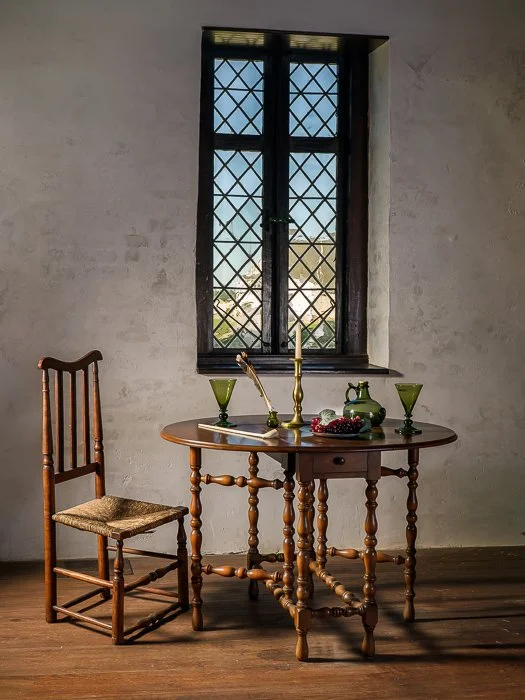
Photographing historic interiors requires a different approach than photographing a newly constructed or staged home.
One of the challenges is working around existing furnishings. In many historic properties, moving furniture isn't an option, which means finding compositions that work with what is already in place.
The first-floor bedroom was a good example. A four-poster bed occupied much of the room, and its posts frequently entered my compositions. Sometimes I could reframe the camera or crop an image to eliminate a distracting bedpost.
I also wanted a straight-on composition of a table and two chairs positioned across the room. I tried placing my camera between the bed and the wall, but there wasn't enough space to make the composition work. Instead, I adjusted my position and photographed the arrangement from an angle.
Not every composition works the way you initially envision it. Sometimes the limitations of a space require you to see it differently. Every historic property requires a slightly different approach, something I consider when photographing historic homes and interiors.
Working Within a Limited Time
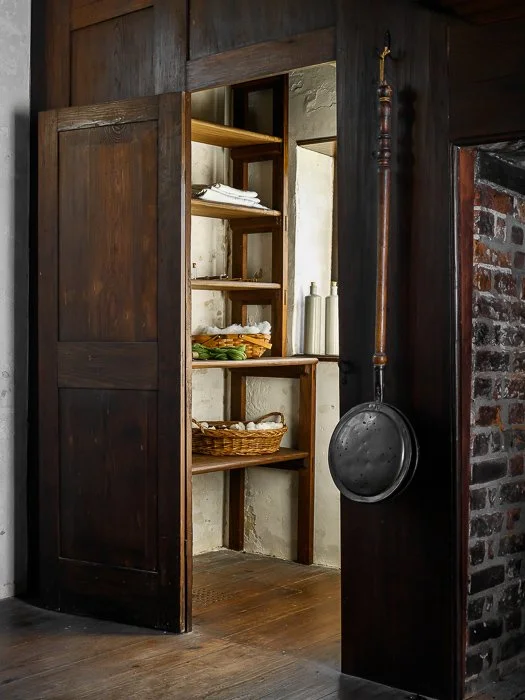
Another consideration was time. I had approximately two to three hours to photograph the interiors, with a volunteer accompanying me throughout the house.
I wanted to be respectful of their time while making the most of the opportunity.
That meant thinking quickly about compositions, camera placement, and lighting. Each room presented different challenges, and I had to decide which compositions were worth pursuing and when it was time to move on.
It's a balance between working efficiently and giving each photograph the attention it deserves. I'd rather come away with fewer, carefully considered images than rush through a house simply to capture more photographs.
This is also why I believe the time spent creating an architectural photograph matters. I'm not simply taking a picture. I'm creating an image that does justice to what's in front of the camera.
Using Light to Reveal the Details
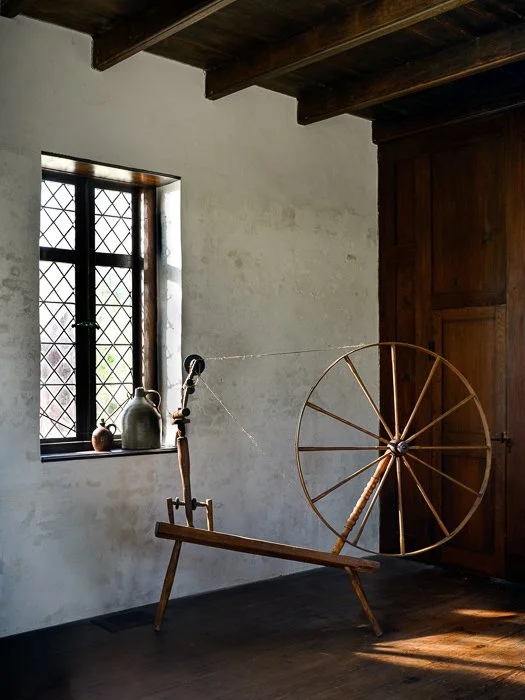
Lighting was another important consideration, particularly with the dark wood paneling, plaster walls, and small leaded-glass windows.
I used strobe lighting throughout the interiors, adjusting its placement depending on the room and the details I wanted to emphasize.
For some compositions, I positioned a strobe outside and directed the light through the windows.
One of my favorite examples was a photograph of a spinning wheel. By placing the light outside, I was able to emphasize the pattern of the leaded glass while illuminating the thread and portions of the wheel.
The light helped separate those finer details from the surrounding room and brought attention to craftsmanship that might otherwise be overlooked.
Upstairs, the wood-paneled walls created a naturally darker space. Rather than trying to brighten every corner, I worked with that atmosphere. Using a smaller light modifier, I directed the strobe toward particular areas, allowing other portions of the room to remain in shadow.
I didn't want to remove the character of the rooms through lighting. I wanted to use light to reveal what was already there.
For me, photographing an interior isn't simply about making everything visible. It's about deciding what deserves attention and using composition and light to guide the viewer toward it.
Why Homes Like the Newbold-White House Matter
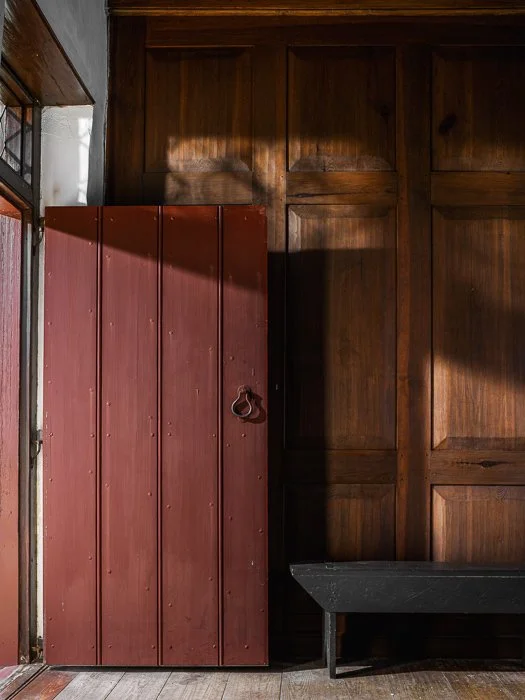
One of the things I appreciate most about historic homes is the evidence of the thought and craftsmanship that went into building them.
The Newbold-White House has stood for almost 300 years. That says something about the materials and construction, but it also speaks to the care and commitment required to preserve a property for future generations.
We live in a time when older homes are often torn down and replaced with newer construction. While I understand that homes need to accommodate modern living, I sometimes wonder how much character we lose in the process.
This appreciation for older homes is also why I believe historic home photography matters. It provides a way to document the craftsmanship and architectural details that make these properties worth preserving.
I've always been drawn to smaller homes with architectural details, interesting materials, and a sense of history. I appreciate the individuality of older homes, even when their rooms aren't perfectly proportioned or their finishes show their age.
The Newbold-White House is a reminder that a home doesn't have to be large or elaborate to be significant.
Materials mattered. Craftsmanship mattered. And the fact that this house is still standing gives us an opportunity to appreciate both.
Preserving a Moment in the House's History
Photography is one small part of historic preservation.
It doesn't replace the work of maintaining and restoring a property, but it provides a visual record of what exists at a particular moment in time.
My photographs are a record of how I saw the Newbold-White House in the fall of 2026. The light moving through the leaded-glass windows, the textures of the plaster and wood, and the craftsmanship that has endured for nearly three centuries.
When someone looks at these photographs, I hope they notice more than an old house. I hope they appreciate the workmanship, the architectural character, and the dedication it takes to preserve a property for future generations.
And that is the heart of KEPT—preserving through photography the history, craftsmanship, and architectural details that deserve to be remembered.
Photographed by Park and Vine Studio, specializing in interior and architectural photography for places with character in Raleigh, Edenton, and surrounding areas of North Carolina.